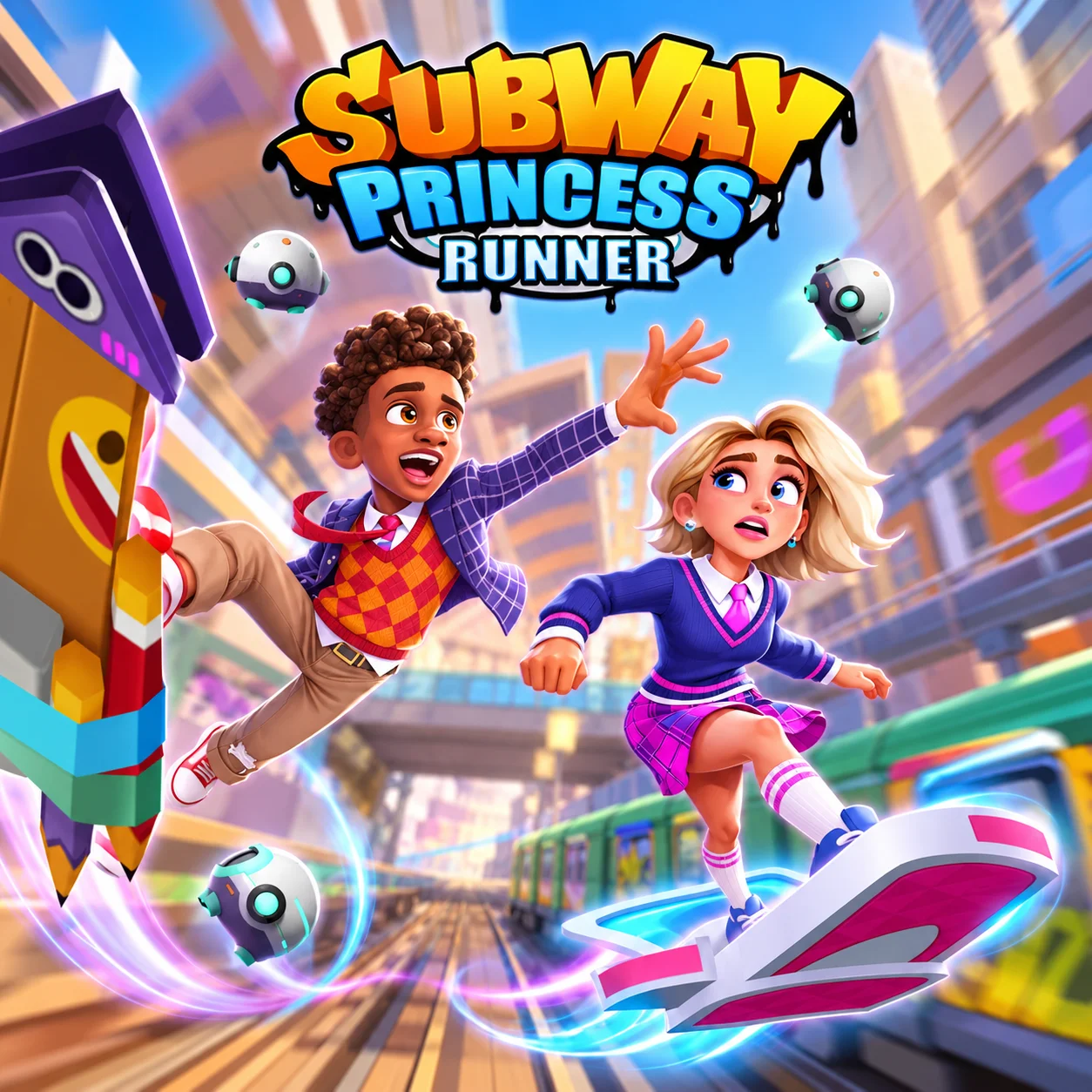












About Subway Runner
Subway Runner uses switching lanes, jumping and sliding while the character runs automatically as the main gameplay hook, with the endless runner format keeping the action focused.
Keep the runner moving and switch lanes with Left/Right.
Up handles jumps and Down handles slides, giving you three direct responses to the obstacles placed along the track.
Continuous movement turns the problem into a moving route rather than a stationary one. small decisions about position and timing matter more as the route becomes less forgiving.
How to Play Subway Runner
- Keep the runner moving and switch lanes with Left/Right.
- Up handles jumps and Down handles slides, giving you three direct responses to the obstacles placed along the track.
- The route keeps moving, so each action should leave enough room for the following section.
- Do not wait until the obstacle is directly in front if the movement system needs time to change direction.
- Choose the next lane early, especially when a slide or jump will follow immediately.
Controls
Subway Runner is played in the browser with Left/Right Arrow, Up Arrow, and Down Arrow.
Lane Changes, Jumps and Slides Work Together
Subway Runner uses three basic responses to keep the run alive: move sideways, jump, or slide.
You has to choose the response that matches the shape of the next obstacle.
The mechanic matters because it can be planned for before the action happens.
Coins Give the Safe Route a Second Objective
Staying alive is not the only reason to move between lanes.
Coins pull the character toward different parts of the track, creating a small trade-off between a clean escape and a better collection line.
The Same Track Serves Two Goals
The route asks you to survive and collect at the same time.
A lane can be useful because it avoids an obstacle or because it contains coins, and sometimes those goals point in different directions.
Once the mechanic is understood in Subway Runner, you can plan around it before the action happens.
Subway Runner becomes easier to manage when the mechanic is treated as part of a sequence rather than a single action.
Practical Tips
- Choose the next lane early, especially when a slide or jump will follow immediately.
- Look at the next obstacle before committing to the current movement.
- Use the center or the side with the most recovery space when the route gives you a choice.
- When Subway Runner fails, identify the input that removed your recovery space instead of simply trying to move faster.
FAQ
What is the main goal in Subway Runner?
Its main gameplay hook is switching lanes, jumping and sliding while the character runs automatically.
Which controls do you use in Subway Runner?
Use Left/Right Arrow to change lanes, Up Arrow to jump, Down Arrow to slide.
What is the core challenge?
Keep the runner moving and switch lanes with Left/Right.
What should you know about Lane Changes, Jumps and Slides Work Together?
Subway Runner uses three basic responses to keep the run alive: move sideways, jump, or slide.
What should you know about Coins Give the Safe Route a Second Objective?
Staying alive is not the only reason to move between lanes.
What is a useful beginner tip?
In your first few attempts, choose the next lane early, especially when a slide or jump will follow immediately.
What changes once you get more comfortable with the game?
Once the basics are familiar, the route asks you to survive and collect at the same time.
More Games Like This

Bottle Jump 3D

Cannon Balls 3D
Crazy Runner In City

Crowd Run 3D

Curve Ball 3D

Dark Runner
Death Run 3D

Dragon Vs Bricks

Endless Truck
Endless Tunnel
Flip Runner